
Did I Cause My Miscarriage?
The guilt. The replaying. The 2am question that won't leave you alone. The honest, compassionate answer — backed by science, written with love.
Read the truth— The hardest truth to believe after pregnancy loss
It's 2am. Everyone else is asleep. And you're lying there in the dark, replaying it.
The coffee you drank before you knew. The workout you did that week. The heavy box you carried. The argument that left you sobbing. The sushi. The stress. The moment you forgot your prenatal vitamin.
Your mind won't stop. It keeps cycling back to the same unbearable question:
Did I do this?
If that's where you are right now — exhausted, guilty, searching for the thing you did wrong — this article was written for you. Not to dismiss what you're feeling. Not to hand you a list of statistics and expect them to help. But to sit with you in this, honestly, and tell you the truth that so many women never fully receive after pregnancy loss.
The Guilt Nobody Warned You About
Nobody prepares you for the guilt.
People talk about miscarriage grief in terms of sadness. Of loss. Of the empty nursery and the name you had already chosen in your head. But the guilt? That particular kind of self-torture where your mind turns into a detective hunting for evidence that you are responsible? Nobody mentions that part.
And yet it is one of the most universal experiences women describe after pregnancy loss.
You search your memory for the crime. You find candidates immediately — because of course you do. You're human. You did a hundred ordinary, imperfect things in those early weeks of pregnancy. You lived your life.
And now you're sitting in the wreckage of something you loved, and your mind — desperate for control, desperate for a reason, desperate for anything that makes this make sense — has decided that the reason must be you.
The desperate need to find a cause is your mind trying to make an unbearable thing bearable. Because if you caused it, you can prevent it next time. Because if you caused it, the universe still makes sense.
But the truth is harder — and also, ultimately, more freeing — than that.
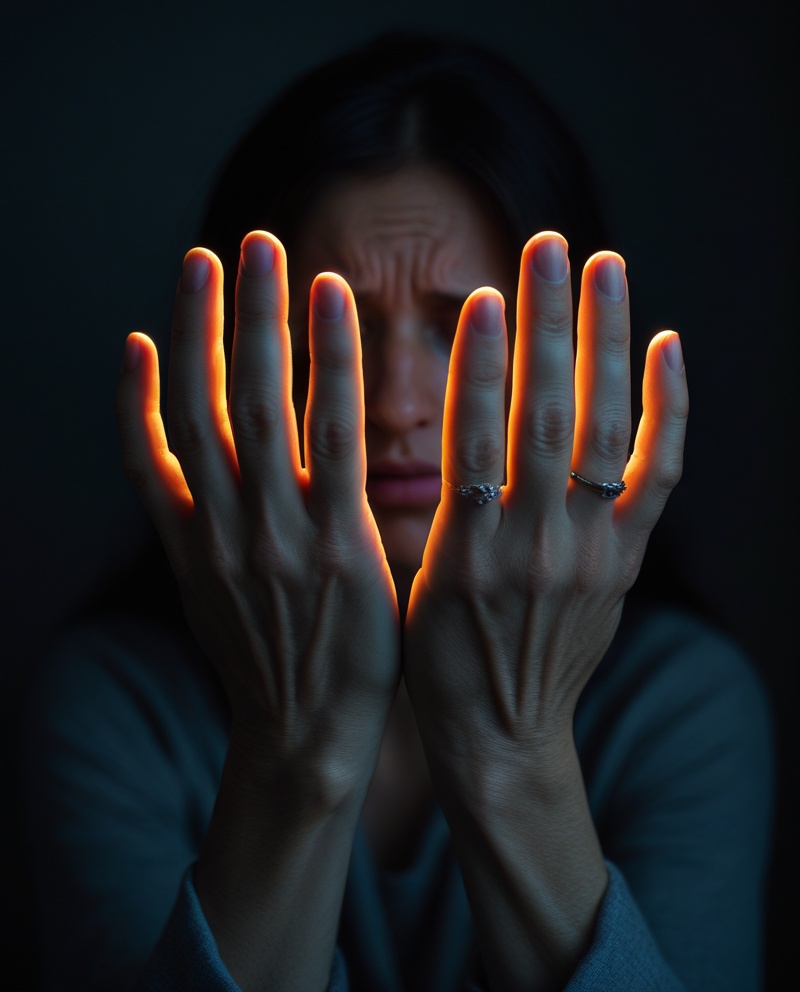
Did I Cause My Miscarriage? What the Science Actually Says
The vast majority of first-trimester miscarriages — roughly 80% of all pregnancy losses — are caused by chromosomal abnormalities that occur at the moment of fertilisation. Our complete guide to first trimester pregnancy loss explains every cause in detail — backed by WHO, ACOG and NHS.
This is not something that happens because of what you ate, how much you exercised, how stressed you were, or what you did or didn't do. It happens at the cellular level, in the earliest moments of a pregnancy, before most women even know they are pregnant. The chromosomes don't pair correctly. The embryo cannot develop into a baby. The body recognises this and ends the pregnancy.
It is a heartbreaking biological reality. And it has nothing to do with you.
What does NOT cause the overwhelming majority of miscarriages
- A single stressful day or week
- Ordinary exercise, including running, yoga, or gym workouts
- Climbing stairs or carrying shopping
- One cup of coffee
- A glass of wine before you knew you were pregnant
- Forgetting a prenatal vitamin
- Working long hours or flying
- An argument, a crying spell, or an emotionally difficult period
- Sex during early pregnancy
This is not a reassuring list invented to make you feel better. This is what decades of obstetric research consistently shows. You did not do this.
"But What If I Did Something Specific?" — Answering the Questions That Won't Leave You Alone
Did Climbing Stairs Cause My Miscarriage?
No. In a healthy pregnancy without any diagnosed complications, climbing stairs is not a risk. Neither is carrying laundry, walking to work, standing for long periods, or any other movement that is part of ordinary daily life.
After a miscarriage, the mind latches onto the most recent physical exertion and makes it mean something. This is how grief works — not how biology works. Unless your healthcare provider had specifically restricted your activity due to bleeding, severe pain, or a diagnosed condition, moving your body did not end your pregnancy.
Can Stress Cause a Miscarriage?
This is one of the most common fears — and one of the most misunderstood. The everyday stress of work, relationships, finances, or even a genuinely terrible week does not cause chromosomal miscarriage.
If stress caused miscarriage, humanity would have ceased to exist long before the modern era. Women have carried healthy pregnancies through war, famine, grief, poverty, and trauma throughout all of history. Your difficult month did not cause this.
I Drank Before I Knew I Was Pregnant — Did That Cause It?
This is one of the most painful variations of miscarriage guilt. The answer, in the vast majority of cases, is no. The research on first-trimester pregnancy loss does not support the conclusion that moderate alcohol consumption before a confirmed pregnancy is a primary cause of chromosomal miscarriage.
You did not poison your baby. The loss you are carrying was not caused by the life you were living before you knew.
The Grief That Doesn't Follow Anyone's Timeline
People will expect you to be sad for a while and then better. They will stop asking after a few weeks. Life around you will return to normal. And you'll smile and say you're fine because the alternative — trying to explain that you are still devastated — feels like too much to ask of anyone.
This is one of the loneliest parts of miscarriage.
Is It Normal to Still Be Sad 6 Months After a Miscarriage?
Yes. Completely, absolutely, entirely normal.
Six months after a miscarriage, many women still think about their baby every single day. Grief does not have a deadline. And miscarriage grief carries a particular weight because it is so often invisible. There was no funeral. In many cases, there was no public acknowledgement at all. The world did not stop.
You are not required to be fine by now.

Grief counsellor Lois Tonkin introduced one of the most honest ideas in bereavement support — the concept of growing around grief. She describes grief not as something that shrinks over time, but as something that your life gradually grows around.
In the beginning, grief fills everything. But slowly — not because you decide to, not because someone tells you it's time — life begins to expand. You rebuild. You find warmth again. You laugh at something and don't immediately feel guilty for it.
The grief doesn't disappear. It simply no longer fills every corner of who you are. You get bigger around it. That is not forgetting your baby. That is surviving your loss.
Why Seeing Pregnant Women Still Hurts — Even When You're Happy for Them
A pregnancy announcement can hit like a physical thing. A newborn photo can bring tears you weren't expecting. This does not make you selfish or bitter or broken. It makes you a person who experienced a loss that is still raw.
These moments don't hurt because you want something bad for someone else. They hurt because they remind you of the future you were building — the one that was taken from you. Your pain is about your baby, not about their joy. Both things can exist at once.
The Grief No One Talks About: Worden's Four Tasks of Mourning
Psychologist William Worden offered something more honest than "stages of grief." He called them tasks — because grief does not move in a predictable line. It loops back. It overlaps. It arrives in waves you didn't see coming.
Task One: Accept the loss is real
Not over it — just allowing yourself to stand inside the truth of what happened. That is the only place healing can begin.
Task Two: Feel the pain
Not manage it. Not perform it for others. Suppressing grief does not reduce it — it displaces it, heavier and harder to name.
Task Three: Return to living
Very slowly, very gently. Finding out who you are now and what life looks like from where you're standing today.
Task Four: Carry love forward
Your baby does not have to disappear from your story for you to find peace. Love can live in a continuing life.

Scared to Try Again After Miscarriage? This Is What That Fear Is Really About
Many women assume that falling pregnant again will fix the pain. Then they get pregnant again, and discover something they weren't prepared for.
The excitement is gone — or buried so deep beneath terror that they can barely feel it. Every cramp sends them to the bathroom to check. Every appointment feels like waiting for bad news.
What if it happens again?
Can I survive another loss?
Will I ever feel safe during pregnancy?
These fears are not irrational. They are the completely understandable response of someone who trusted their body, trusted the pregnancy, trusted the future — and had all of it taken away without warning. If you want to understand how one woman walked through this fear and came out the other side, read Olivia's real first pregnancy miscarriage story.
Healing from pregnancy loss is not simply about the loss itself. It is about rebuilding trust — in your body, in the future, in the possibility of hope — when you have very good recent evidence that hope can be devastated.

🌿 A Quiet Practice for the Heaviest Days
Sit somewhere comfortable. Close your eyes if that feels safe, or look softly downward, away from distraction.
Notice your breath. Don't try to change it. Just let it be.
Now, slowly, build a place in your mind. Somewhere that feels safe and peaceful — yours alone. A beach. A field. A quiet room with light coming through the window. Real or imagined — it doesn't matter.
When you're there, notice what you see. The colours. The light. The sounds. The smell of the air.
Stay here for as long as you need. Before you leave, find one word that connects you to this place. A word you can return to on the hardest days.
Open your eyes when you're ready. This is not a cure. But it is a door — back to yourself.
Things People Say After Miscarriage That Hurt More Than They Help
Most hurtful comments after miscarriage come from people who genuinely want to help. But grief does not work the way well-meaning people expect it to.
"At least you know you can get pregnant." — The concern was never whether pregnancy could happen. The concern is the baby who was lost.
"You can always try again." A future baby does not replace this baby. They mattered. Now.
"At least it was early." Grief is not proportional to gestational age. A woman who loses a pregnancy at six weeks has lost her child, her future, her first months of hope and love.
"Everything happens for a reason." In the raw aftermath of pregnancy loss, being told there is a reason feels like being told your baby's death was deserved. It wasn't.
What to Say Instead
The most helpful words are often the simplest. "I'm so sorry." "I'm thinking of you." "I'm here. You don't have to explain anything."
You do not need to fix the pain. You only need to acknowledge it. Sitting with someone in their grief without trying to improve it is one of the most profound acts of love.
When to Reach Out for More Support
Grief after miscarriage is not a disorder. It is a normal, human response to real loss. But grief can sometimes become something that requires more support than a person can find alone.
If your grief is preventing you from functioning in daily life — if you have stopped engaging with people you love, lost interest in everything that once mattered, are struggling to work, eat, or sleep for weeks at a time — please reach out to a healthcare provider or grief counsellor.

Asking for help is not a sign of weakness. It is a sign that you are carrying something that is genuinely too heavy to carry alone. And you do not have to carry it alone.
Questions Women Ask Most After Miscarriage
Healing After Miscarriage Does Not Mean Forgetting Your Baby
This is the fear beneath all the other fears.
If I heal, I will forget.
If I stop grieving every day, I am letting go.
If I laugh again — does that mean what I lost mattered less?
No.
Healing does not erase love. It never has. It never will. Healing means learning how to carry the love you have for your baby into a life that continues. It means finding that your loss has changed you — deeply, permanently — and choosing to live inside that changed self with as much grace and gentleness as you can.

Your baby mattered. Your grief is valid. Your healing is not a betrayal.
And wherever you are in this journey — whether it's been three weeks or three years, whether you cry every day or have finally found days where you don't — you are not alone in this.
You never were.
You didn't cause it. You couldn't have stopped it. And you are not required to be over it yet.
If this article helped you breathe even a little easier at 2am — please share it with someone who might need it too. Every woman who finds this page deserves to find it sooner.
Read More Articles →

Community
You Are Not Alone
If this article resonated — your experience matters too. Share it below. 🤍