In 2022, a group of friends changed the destination of a long-postponed trip because one of them was bringing his four-year-old son. At the Grand Canyon, the gentler place they chose, the boy slipped away from the group, and the writer lost both his friend and the child. This is a personal account of that trip, and of what he came to understand afterward about hazards a young child cannot judge and about who is responsible for watching.
It was Saturday morning, May 21, 2022, when a message landed in our friends’ WhatsApp group. One word.
“Urgent.”
When I opened it, I found out that the guys had planned to get together that evening.
It was the weekend, and the timing suited me perfectly. What better chance could there be to see some old and dear friends after so long? I couldn’t say no.
We had been friends for so long that postponing our plans had almost become a tradition. Every time we talked about getting together, something came up. One year it was work, another year it was money, another time someone had a family commitment. We would make plans, put them off, and forget about them for a while.
But that evening, we all got together.
We sat around the same old table where we had made so many plans before, talking, laughing, remembering the old days. Then the conversation came back to the trip we had been postponing for years.
I looked at everyone and said,
“Enough. We’re going.”
Nobody laughed.
Within an hour, the destination was decided.
Zion National Park, Utah.
Zion is in southwestern Utah, near the small town of Springdale. The park is known for its sandstone cliffs, deep canyon walls, and winding trails. Our main goal was Angels Landing, a spectacular spot high above Zion Canyon. We knew it was beautiful. We also knew that parts of the route were narrow, steep, and exposed.
We planned to stay in a hotel in or around Springdale and make day trips into the park.
Then Ali, one of my closest friends, told us that he wanted to bring his four-year-old son, Raza. He hesitated as he said it.
His wife strongly objected.
“He’s too young for this trip,” she told him. “You know how clingy he is. You’ll spend the entire time looking after him.”
Ali understood her concern.
But Raza had overheard us talking about the trip.
“Dad, please let me come.”
Ali couldn’t say no. That was his weakness when it came to his son. Raza could ask for almost anything, and Ali would find a reason to say yes.
“I’ve never regretted saying yes to him,” he told us with a smile.
His wife wasn’t convinced.
Neither was I.
This time, even Ali began thinking about what she had said. We all knew that Angels Landing was not a place where we wanted to take a four-year-old.
So we changed the plan.
We hadn’t ignored the risk. We had looked at it, and we let it change what we did.
We still wanted somewhere just as spectacular, but somewhere we could enjoy the scenery without taking Raza onto a difficult mountain route. Someone suggested Grand Canyon National Park, in Arizona.
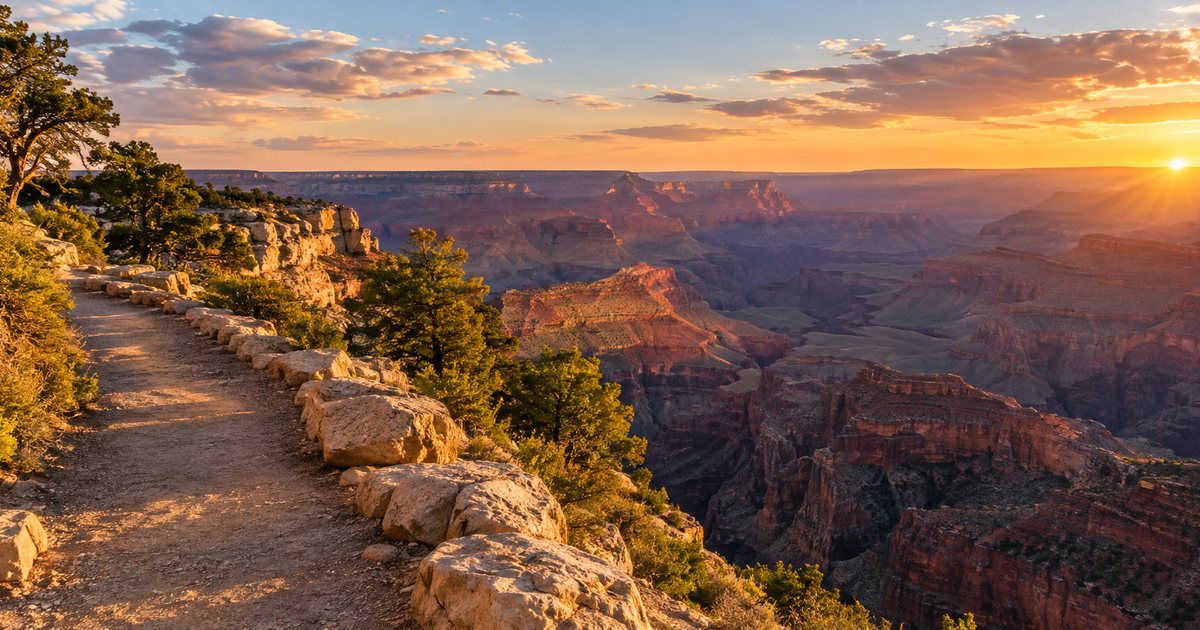
It was in a different state, but it had exactly the scenery we were looking for: huge canyon views, long stretches of rim, beautiful viewpoints, and walking trails along the edge of the canyon. It also seemed like a place where we could spend time with Raza without taking him down a difficult trail into the canyon.
So we would go to the Grand Canyon instead.
A few days later, we set off.
Each morning, we drove around the South Rim and spent the day exploring. The first few days were wonderful. We walked along the rim, stopped constantly to take photographs, argued about where to eat, and stayed out longer than we had planned.
For the first time in years, we weren’t talking about work.
We weren’t talking about responsibilities.
We were simply old friends again.
Then came the worst day of my life.
We were walking along the South Rim, taking in the view. The canyon was enormous, and every viewpoint seemed to show us something different. We knew we were still near the edge, so we kept reminding each other to stay together and to take extra care of little Raza. We must not let him out of our sight.
It was around 4 p.m. when we decided to stop for some snacks along the rim and stay until sunset. We had a great view of the canyon, and honestly, that was exactly what we had been looking for.
Raza was sitting on his father’s lap.
We were all relaxed, eating, talking, laughing, enjoying the view.
None of us noticed when Raza quietly slipped away.
Then I looked around and realized he was no longer with us.
“Where’s Raza?”
I alerted everyone, and we started looking around. Then I spotted him.
He was following a squirrel.
Someone shouted,
“Raza!”
He didn’t stop. He just kept moving after it.
At first I didn’t think much of it. Then I realized how close he was getting to the dangerous part of the trail.
“Ali!”
Ali turned. For one terrible second, he didn’t understand what was happening.
Then he saw his son.
Everything changed.
He ran.
“Don’t run!”
We all shouted at once.
“Ali, STOP!”
The terrain ahead was uneven and exposed, and the trail became narrow in that section. But Ali wasn’t listening anymore. I don’t think he was thinking about himself. He was thinking about one thing.
His son.
He reached toward Raza. For a moment, it looked as though he had him.
Then Ali’s foot caught on a stone.
In the next instant, both of them disappeared from our view.
We stood frozen.
Nobody knew what to say.
Then we started shouting for help.
The emergency responders came, but there was nothing anyone could do.
We had gone there for a beautiful evening together. Instead, we came back carrying a memory none of us will ever be able to leave behind.
I remember sitting in the hotel room that night, looking at the empty chair where Ali had been sitting that morning. His son’s little toy was still on the floor.
Years of saying, We’ll go next year.
And when we finally went, we lost two people we loved.
People sometimes ask me why Ali ran. I never know what to tell them. Of course it was dangerous. Of course, looking back, there were safer things he could have done. But I don’t think he was thinking like a tourist at that moment. He was thinking like a father.
I still think about his wife’s words.
“He’s too young for this trip.”
And I think about Ali’s answer.
“I’ve never regretted saying yes to him.”
He never regretted saying yes.
What We Had Already Done
There’s a question I keep coming back to, and it’s about the afternoon, not the end of it.
We had tried to be careful. We looked at Angels Landing and decided it was no place for a four-year-old. We changed the plan. At the Grand Canyon, I remember us saying, more than once, that we were still near the edge. We told each other to keep Raza in sight.
Then we sat down with our snacks and our view.
At the time, nothing about that afternoon felt obviously wrong to me. I remember us all relaxing. Raza had been on Ali’s lap, and looking back, I wonder whether that made the rest of us feel less responsible for watching him. I don’t know that it did. It is only a question I ask myself.
So the question I ask now is a plain one, and it isn’t comfortable.
We changed the destination. We warned each other. We thought we were being careful. But who, exactly, was watching the child?
I’m not asking it to blame anyone at that table. I was at that table. Go looking for the mistake in that day and you’ll find it in a dozen places, and every one of them is easier to see now than it was then. I don’t know what would have changed the ending. I don’t think anyone does.
But I don’t think the yes was the mistake.
What I have come to think is that the two reasonable things we did were not the same as a plan. A gentler place can lower some risks. A warning can tell people there is danger. Neither one tells a particular person: this child is yours, right now.
We had made watching Raza everyone’s job, which is very close to making it no one’s.
That is the part I keep thinking about.
Everything above is my memory of that trip, and I want to be careful about what that means. I know where we were. I know Raza followed the squirrel. I know Ali ran after him. I know what happened afterward. I do not know exactly what each of us was watching in those minutes, or what any of us noticed. Fear has a way of filling the gaps in a story with answers we don’t actually have. I wrote about that same discipline in a very different situation: Is My Baby Safe in This House Tonight?, where the question is what a parent actually knows and what uncertainty can make the mind assume.
So from here on I’ll try to keep three things apart: what I remember, what the sources say, and where I’m only guessing.
One thing I read first was how the National Park Service describes the trail we chose. It calls the Grand Canyon’s Rim Trail the easiest walking in the park and a good option for all ages, including those with young children. It also says the unpaved section between Powell Point and Monument Creek Vista is narrow and close to the edge. That is general guidance about the trail, not a description of where we were. But it tells me our choice was not a strange one, and that a place that suits families can still have edges.
Risk and Hazard
The words I found for this came from people who study children’s play. They draw a line between two things we usually run together: risk and hazard.
A risk is a challenge a child can see and judge for themselves, like climbing or balancing. A hazard is different. It is a danger the child can’t recognize or manage. Researchers such as Mariana Brussoni, who studies children’s outdoor play and injury prevention, argue that children benefit from manageable risk, and that trying to remove all of it from childhood has costs.
So this is not an argument for saying no to everything that looks frightening.
It also doesn’t explain what happened to Raza, and I can’t say what the research would call that moment. What it gave me was a question: what can a four-year-old reasonably be expected to understand about a serious drop?
My own answer, and it is only my answer, is: not enough to rely on. Raza wasn’t judging the ground. He was watching a squirrel. If a child can’t be expected to recognize a danger, then someone else has to be the one who accounts for it.
Someone on Duty
The idea that helped me most came from water safety. I want to be clear about that, because it isn’t cliff guidance.
Water-safety organizations recommend a water watcher: one adult, chosen on purpose, whose job in that moment is to watch the children. The National Park Service, which promotes the idea with Water Safety USA, describes that person as someone who stays within arm’s reach of the people they supervise, pays attention and avoids distractions, and stays in place until another adult replaces them.
Not everybody.
Not whoever happens to notice.
One person.
For young children who can’t swim, Water Safety USA also uses the term touch supervision: staying close enough to reach the child at all times.
Those are water rules. I’m borrowing the principle behind them, not claiming they establish a rule for cliffs. The Grand Canyon guidance I found from the National Park Service is more general: stay on designated trails and walkways, keep at least six feet from the edge, know where the edge is, and keep an eye on everyone in your group, especially small children. New South Wales national parks advise close supervision of children near cliffs. I couldn’t find a rule in either about how close an adult should stay to a small child, and I couldn’t find research testing arm’s-reach supervision at a canyon edge.
So this is the principle, in my own words, and it is my extension of the water guidance, not an official recommendation. One adult deliberately accepts responsibility for the child. That adult stays attentive, and close enough to act. And when they need to stop, another adult takes over out loud.
“I have him.”
Then, when that person needs a break:
“I have him now.”
Not: “We’ve got him.”
I need to be honest about the limit of this. Raza was on his father’s lap, and he still got away from all of us. A named watcher, an arm’s length, a handover: none of it would have promised a different afternoon. I don’t know that it would have changed anything. What I know is narrower. That afternoon, I couldn’t have told you whose job it was to be watching Raza at the moment he left. I would like to be able to.
There is one more thing I keep in mind, and I keep it short. In December 2024, the National Park Service reported that a toddler at Kīlauea in Hawaiʻi wandered off from his family and ran toward a 400-foot cliff edge before his mother caught him. I include it for one reason: it shows how quickly a small child can move toward a serious hazard. It tells me nothing about our afternoon.
What a Yes Needs
Most of the time, a child asks to come along, a parent says yes, and nothing happens. That is ordinary life with a small child, and most of it is good.
I don’t think the answer is to say no more often. A yes doesn’t mean anything goes. A yes can come with conditions, and it helps to work out what they are before the day begins. If I were answering again, these are the questions I would want to be able to answer first:
- Where exactly will the child be?
- What hazard is there?
- Can the child reasonably recognize it?
- Which adult is watching?
- What happens if that adult becomes distracted, tired, or needs a break?
- Who explicitly takes over?
- And is the honest answer, this time, simply not this time?
We did the first part. We looked at the place. We decided against Angels Landing and chose the South Rim because it seemed gentler. We knew there were edges. What I don’t remember us doing is deciding who, specifically, would hold the job of watching Raza. I can see how easily an edge slips out of mind when the view is beautiful and the snacks are out.
Sometimes the yes turns into:
“Yes, but not there.”
Or:
“Yes, if one of us has nothing else to do but watch him.”
And sometimes it turns into “not this time,” which doesn’t have to mean never.
None of this guarantees anything. A plan is not a guarantee, and I won’t pretend it is. No supervision plan can promise how a particular afternoon ends. All it can do is make the responsibility clear before the moment arrives.
Ali said he never regretted saying yes to Raza.
I believe him.
I hope every parent gets to say that.
And I hope that when they do, someone has been asked, by name, to watch the child.
Community
Join the Conversation
If this essay brought something to mind, you're welcome to share it below.
Sign in with GitHub to join the public discussion.
🙌 No account needed — just share your thoughts below.
Thanks — your comment has been submitted and will appear here once reviewed.
Something went wrong submitting your comment. Please try again in a moment.